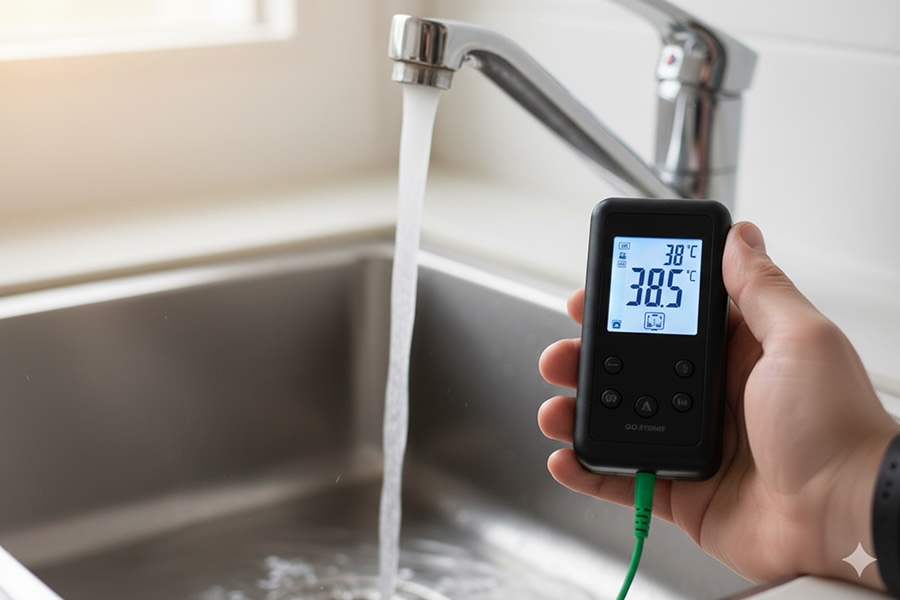
Temperature control is one of the most fundamental and effective measures in preventing Legionella bacteria from proliferating within building water systems. Regular temperature monitoring ensures that water remains outside the bacterial growth range and that control measures are functioning as intended.
However, to achieve real control and demonstrate compliance with HSG274 Part 2, temperature monitoring must be consistent, accurate, and fully documented. Incomplete or inaccurate records can undermine even the best maintenance regimes, leaving buildings at risk.
Why Temperature Matters for Legionella Control
Legionella bacteria thrive between 20°C and 45°C with optimum growth around 37°C. Maintaining cold water below 20°C and hot water above 50°C (or 55°C in healthcare settings) significantly reduces the potential for bacterial growth.
Temperature monitoring acts as an early warning system for identifying potential problems, such as:
Inadequate water circulation
Failing thermostatic mixing valves (TMVs)
Poor insulation or heat transfer
Stagnant water in dead legs or infrequently used outlets
By identifying issues early through regular temperature checks, building operators can take swift corrective action before Legionella risks escalate.
HSG274 Part 2 Guidance on Temperature Monitoring
The HSE's HSG274 Part 2 sets out specific guidance for temperature monitoring as part of an ongoing Legionella control programme. Key requirements include:
Monthly Checks: Hot water outlets should reach at least 50°C (55°C for healthcare) within one minute, and cold outlets should reach below 20°C within two minutes.
Sentinel Outlets: Designated taps and showers that represent the extremes of the system should be tested regularly to confirm temperature performance.
Storage Vessels: Hot water storage cylinders should be checked monthly to ensure flow temperatures are maintained above 60°C and return temperatures are maintained above 50°C.
Record Keeping: All temperature readings should be recorded, dated, and traceable.
Following these guidelines helps maintain control, demonstrate compliance, and ensure your Legionella risk management plan remains effective.
Consequences of Poor Temperature Monitoring
Neglecting temperature monitoring or maintaining poor-quality records can have serious implications:
Increased Legionella Risk – Without accurate temperature control, bacteria can thrive undetected.
System Inefficiency – Fluctuating temperatures can indicate faults, blockages, or insulation failures.
Regulatory Non-Compliance – Missing or inaccurate temperature records breach HSG274 Part 2 and ACoP L8 requirements.
Audit Failures and Legal Exposure – During inspections, lack of clear records can lead to enforcement action, reputational damage, or even prosecution.
Consistent, verified temperature data is the cornerstone of a compliant and defensible Legionella control programme.
The Importance of Accurate and Auditable Records
Recording temperature monitoring accurately and consistently is crucial. Each record should include:
Date and time of the check
Location and outlet name/ID
Measured temperature (cold and/or hot)
Operator name or initials
Any corrective action taken
Accurate data allows for trend analysis — helping identify recurring issues such as gradual heat loss or poor cold water performance. Auditable records provide evidence of due diligence and demonstrate that a proactive approach to Legionella management is being maintained.
A digital Legionella logbook can simplify this process dramatically. With platforms such as Legionella Logbook, responsible persons can:
Record temperatures in real time via mobile devices.
Automatically timestamp and store readings securely.
Access, share, and audit temperature data instantly.
Generate reports for compliance reviews or external audits.
Why Accessibility Matters
In the event of an audit or investigation, quick access to complete, accurate temperature records is essential. Paper-based systems are often fragmented, lost, or illegible. By contrast, digital temperature monitoring records are centralised, traceable, and easily shared with auditors, facility managers, or health and safety teams.
Accessible, auditable records ensure transparency and build confidence that control measures are working effectively — protecting both compliance status and public health.
Temperature monitoring is not just a routine task; it is the foundation of Legionella risk control. Accurate, detailed, and auditable temperature records prove that control measures are effective and allow issues to be identified before they escalate.
By combining consistent monitoring with accessible digital record-keeping, building operators can ensure compliance with HSG274 Part 2, reduce risk, and maintain safe, efficient water systems.

Andrew Arnold
Co‑founder & Director
Andrew has over 20 years' experience in Legionella management and control. As a senior member of the Water Management Society and educated to masters level Andrew has extensive experience in legionella risk assessment of numerous systems and sectors.