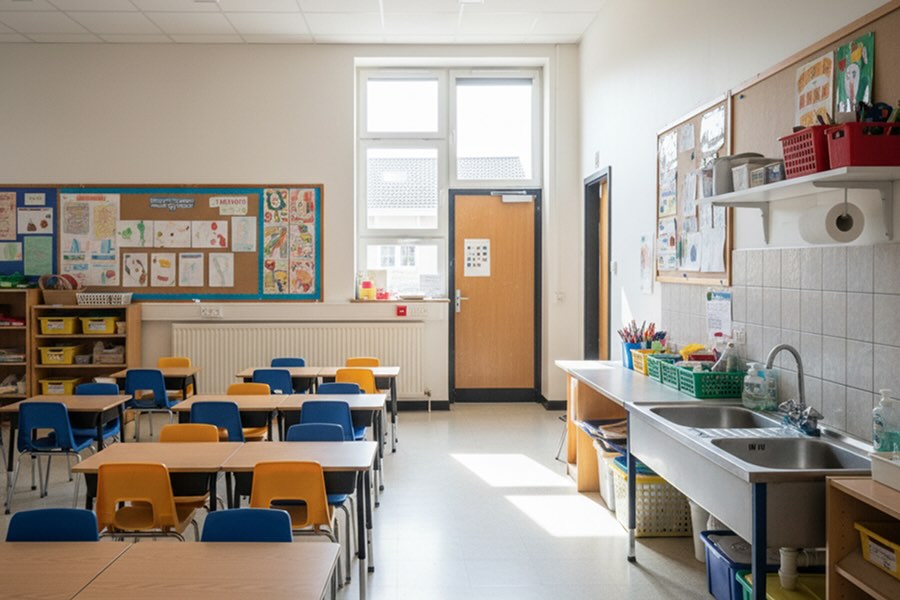
Periods of low occupancy, such as school holidays or seasonal shutdowns, can create conditions that increase the risk of Legionella growth in building water systems. When water remains unused, stagnation can occur, causing temperatures to rise within the system and allowing bacteria to thrive. Understanding these risks and implementing proactive Legionella control measures is essential to maintaining safe water hygiene and compliance with HSE guidance.
Understanding the Risk
Legionella bacteria are typically dormant below 20°C, but during warm weather, especially in urban areas like central London, mains water can rise significantly above this level. This elevated temperature, combined with low water turnover, provides ideal conditions for Legionella growth — particularly in tanks, pipework, and outlets that are infrequently used. Nutrients such as scale, sediment, and corrosion can further enhance bacterial activity and increase the risk of contamination.
Periods of Low Water Use
Buildings often experience periods of reduced water consumption — schools during holidays, offices during closures, or commercial sites during maintenance. Reduced use allows water to stagnate and warm, increasing the risk of Legionella proliferation. Proper system management and routine maintenance during these low-use periods are critical to preventing bacterial growth.
Preventative Measures for Legionella Control
1. Maintain Cold Water Turnover
Ensure cold water storage tanks achieve full turnover within 24 hours (12 hours in healthcare). If water usage is low, reduce tank capacity to encourage flow. Tanks with elevated temperatures compared to incoming mains water should have their volume further reduced.
2. Clean and Disinfect Tanks
Regular inspection, cleaning, and disinfection of tanks is vital to remove sediment, scale, and corrosion. This helps prevent the build-up of nutrients that support Legionella growth.
3. Flush Unused Outlets
Flush outlets that are not used regularly at least weekly, long enough to draw fresh water through and reach stable temperatures. If cold water exceeds 20°C, increase flushing frequency and review insulation quality.
4. Monitor Temperatures and Dosing Levels
Monitor cold water temperatures closely. If manual flushing doesn't keep temperatures below 20°C, increase flushing frequency. Where continuous chemical dosing systems are used, check that dosing rates are effective and remain within safe limits.
5. Legionella Sampling and Ongoing Monitoring
HSE guidance (HSG274 Part 2) recommends Legionella sampling when control measures are inconsistent. During warm periods or low-use conditions, frequent sampling helps verify control effectiveness and provides early warning of bacterial activity.
Warm weather and low water usage can combine to create ideal conditions for Legionella growth. Implementing robust Legionella control measures — including flushing, monitoring, cleaning, and sampling — will ensure systems remain safe and compliant. Regular review of your Legionella risk assessment and water hygiene regime is essential, particularly during low occupancy or seasonal shutdowns.

Andrew Arnold
Co‑founder & Director
Andrew has over 20 years' experience in Legionella management and control. As a senior member of the Water Management Society and educated to masters level Andrew has extensive experience in legionella risk assessment of numerous systems and sectors.