Legionnaires' Disease: Causes, Symptoms and Who Is Most at Risk
Legionnaires' disease is a potentially fatal form of pneumonia caused by breathing in tiny airborne water droplets that contain Legionella bacteria. It is not caught by drinking water, and it is not known to spread from person to person.
For anyone responsible for a building's water systems, understanding how the illness develops and who it affects most is the starting point for sensible control. This article explains the causes, symptoms and higher-risk groups, summarises the latest UK case data, and sets out why the disease underpins the legal duty to manage Legionella risk.
What Causes Legionnaires' Disease?
Legionella bacteria are common in natural water sources such as rivers, lakes and reservoirs, usually in low numbers. The problem arises when they enter man-made water systems and find conditions that let them multiply. The Health and Safety Executive (HSE) identifies water between 20°C and 45°C as suitable for growth, and the risk increases where water stagnates, where there is scale, sludge, rust or organic matter to feed on, and where biofilm develops on internal surfaces.
Infection follows a simple chain of events:
Legionella bacteria are present in the water system.
Conditions allow them to multiply to higher numbers.
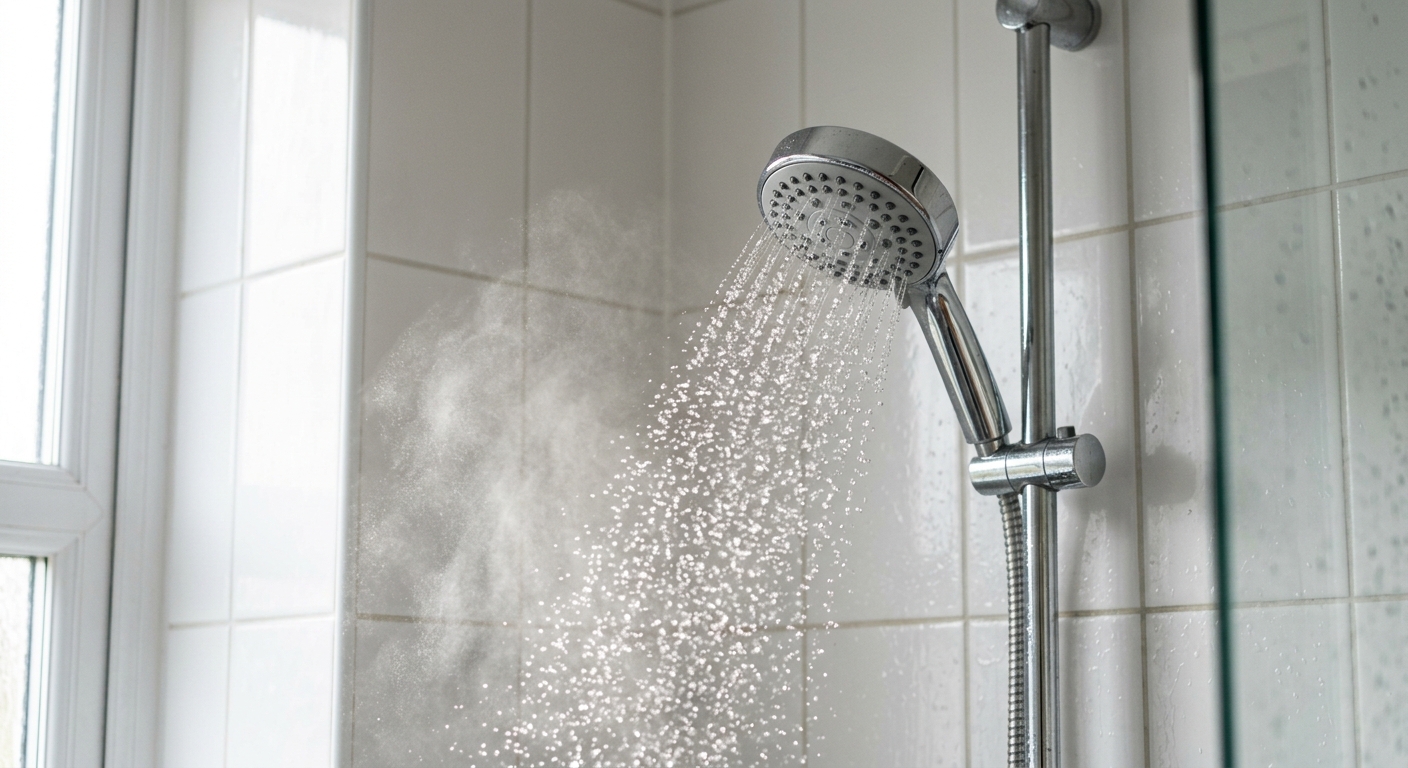
Something creates a spray or mist of fine water droplets (an aerosol), such as a shower, spray tap, cooling tower, spa pool or hose.
A person breathes in those droplets deep into the lungs.
That person is susceptible to infection.
HSE lists the systems most likely to create a risk as evaporative cooling systems, hot and cold water systems, dry/wet cooling systems and spa pools. Every link in the chain above is an opportunity for control, which is why good management focuses on preventing growth and limiting exposure rather than relying on luck.
Symptoms of Legionnaires' Disease and Pontiac Fever
Legionnaires' disease usually starts like flu. According to HSE, early symptoms include:
a high temperature, feverishness and chills
cough
muscle pains
headache
As the illness develops it can lead to pneumonia, and some people also experience diarrhoea and mental confusion. The NHS also lists shortness of breath and chest pain, particularly when breathing or coughing.
The World Health Organization gives an incubation period of 2 to 10 days, with up to 16 days recorded in some outbreaks. That delay matters in practice: by the time someone falls ill, they may have left the hotel, hospital or workplace where they were exposed, which is one reason outbreaks can be hard to trace.
Treatment is with antibiotics, often in hospital. The NHS notes that most people make a full recovery, although it can take some weeks to feel normal again.
Pontiac fever and Lochgoilhead fever
Legionella bacteria also cause milder illnesses. HSE groups Legionnaires’ disease, Pontiac fever and Lochgoilhead fever under the term legionellosis. Pontiac fever is a short, flu-like illness without pneumonia. The WHO describes it as self-limiting, usually lasting 2 to 5 days, with symptoms appearing within about 48 hours of exposure. Lochgoilhead fever is a similar non-pneumonic illness. It is named after a 1988 outbreak at a leisure complex in Lochgoilhead, Scotland, caused by the species Legionella micdadei. The bacteria were traced to a whirlpool spa and its filter, but only after routine cultures had come back negative, because the organism was living inside amoebae. Both illnesses are rarely diagnosed, so their true frequency is unknown.
Who Is Most at Risk?
HSE is clear that everyone is susceptible to infection. However, some people are much more likely to become seriously ill. HSE identifies higher-risk groups as:
people over 45 years of age
smokers and heavy drinkers
people with chronic respiratory or kidney disease
people with diabetes, lung or heart disease
anyone with an impaired immune system
The UK data bear this out. Men are affected roughly twice as often as women, and most cases occur in older adults. This has direct consequences for risk assessment. A care home, hospital ward or sheltered housing scheme serves people who are more vulnerable than the general working population, and the assessment and control scheme should reflect that. A BS 8580-1:2019 risk assessment considers the susceptibility of the people exposed alongside the condition of the system; our article on why your Legionella risk assessment should follow BS 8580 explains the standard in more detail.
Legionnaires' Disease in the UK: What the Data Show
The UK Health Security Agency (UKHSA) publishes annual surveillance figures. Its report for residents of England and Wales in 2024 recorded 472 cases of legionellosis, of which 463 were Legionnaires' disease. Key findings include:
Incidence: 0.7 cases of Legionnaires' disease per 100,000 population.
Where people were exposed: 51.6% community-acquired, 43.8% associated with travel abroad and 4.5% healthcare-associated.
Age and sex: 63.9% of cases were aged 60 and over, and 68% were male.
Deaths: 13 deaths were reported, a case fatality rate of 2.8%.
Seasonality: most cases occurred between June and October, peaking in August.
The late summer peak is a reminder that warmer weather pushes cold water temperatures up into the growth range. Our guidance on managing Legionella risks during low occupancy and warm weather covers the practical response. Legionnaires' disease is also a notifiable disease in England under the Health Protection (Notification) Regulations 2010, so doctors must report suspected cases, and public health teams investigate possible sources.
Why Legionnaires' Disease Drives the Legal Duty to Control Risk
Because the illness can be severe and is preventable, UK law requires those responsible for premises to manage the risk. The duties come from:
The Health and Safety at Work etc. Act 1974, which extends to risks from Legionella arising from work activities.
The Management of Health and Safety at Work Regulations 1999, which provide the general framework for assessing and managing risk.
The Control of Substances Hazardous to Health Regulations 2002 (COSHH), which provide a framework to assess, prevent or control the risk from biological agents such as Legionella.
The Approved Code of Practice (ACOP) L8 explains how to meet these duties and has special legal status: if you do not follow it, you would need to show you have complied with the law in some other way that is equally effective. HSG274 gives the technical guidance for specific systems. In practice, dutyholders are expected to:
identify and assess sources of risk through a suitable and sufficient risk assessment
prepare a written scheme to prevent or control the risk
implement, manage and monitor the precautions
keep records of the precautions and their results
appoint a competent person to take day-to-day responsibility
Routine tasks such as flushing little-used outlets correctly and temperature checks are what turn a risk assessment into real protection.
Key Points
Legionnaires' disease is a potentially fatal form of pneumonia caught by inhaling aerosols containing Legionella bacteria, not by drinking water.
Symptoms start like flu and usually appear 2 to 10 days after exposure.
Everyone is susceptible, but people over 45, smokers, heavy drinkers and people with chronic illness or weakened immunity are at greater risk.
In 2024, UKHSA recorded 463 cases of Legionnaires' disease in England and Wales, with a summer and early autumn peak.
The risk drives clear legal duties under HSWA, MHSWR and COSHH, with ACOP L8 setting out how to comply.
Frequently Asked Questions
Can you catch Legionnaires' disease from drinking water?
Infection is caused by breathing in contaminated water droplets, not by drinking water. The WHO notes that aspiration, where water accidentally enters the lungs while swallowing, is a less common route, mainly in hospital patients.
Is Legionnaires' disease contagious?
HSE states that Legionnaires' disease is not known to spread from person to person. Cases are linked to a shared water source rather than contact with an infected person, which is why investigations focus on water systems.
How long after exposure do symptoms appear?
Symptoms of Legionnaires' disease typically appear 2 to 10 days after exposure, although longer periods have been recorded in some outbreaks. Pontiac fever develops much faster, usually within about two days.
Is Legionnaires' disease fatal?
It can be. UKHSA reported a case fatality rate of 2.8% for England and Wales in 2024, while the WHO gives a typical range of 5 to 10% internationally. Risk of death is higher in older people and those with underlying health conditions, and prompt antibiotic treatment improves outcomes.
References and Further Reading
HSE: Legionnaires' disease. The control of legionella bacteria in water systems (ACOP L8, 4th edition)
UKHSA: Legionellosis in residents of England and Wales: 2024
World Health Organization: Legionellosis fact sheet
Legionnaires' disease is rare, but it is serious and almost always preventable. Understanding how people become infected, and who is most vulnerable, makes it easier to see why each control measure matters and where to focus effort. If you have questions about the basics, our Legionella FAQ page is a good next step.

Andrew Arnold
Co‑founder & Director
Andrew has over 20 years' experience in Legionella management and control. As a senior member of the Water Management Society and educated to masters level Andrew has extensive experience in legionella risk assessment of numerous systems and sectors.