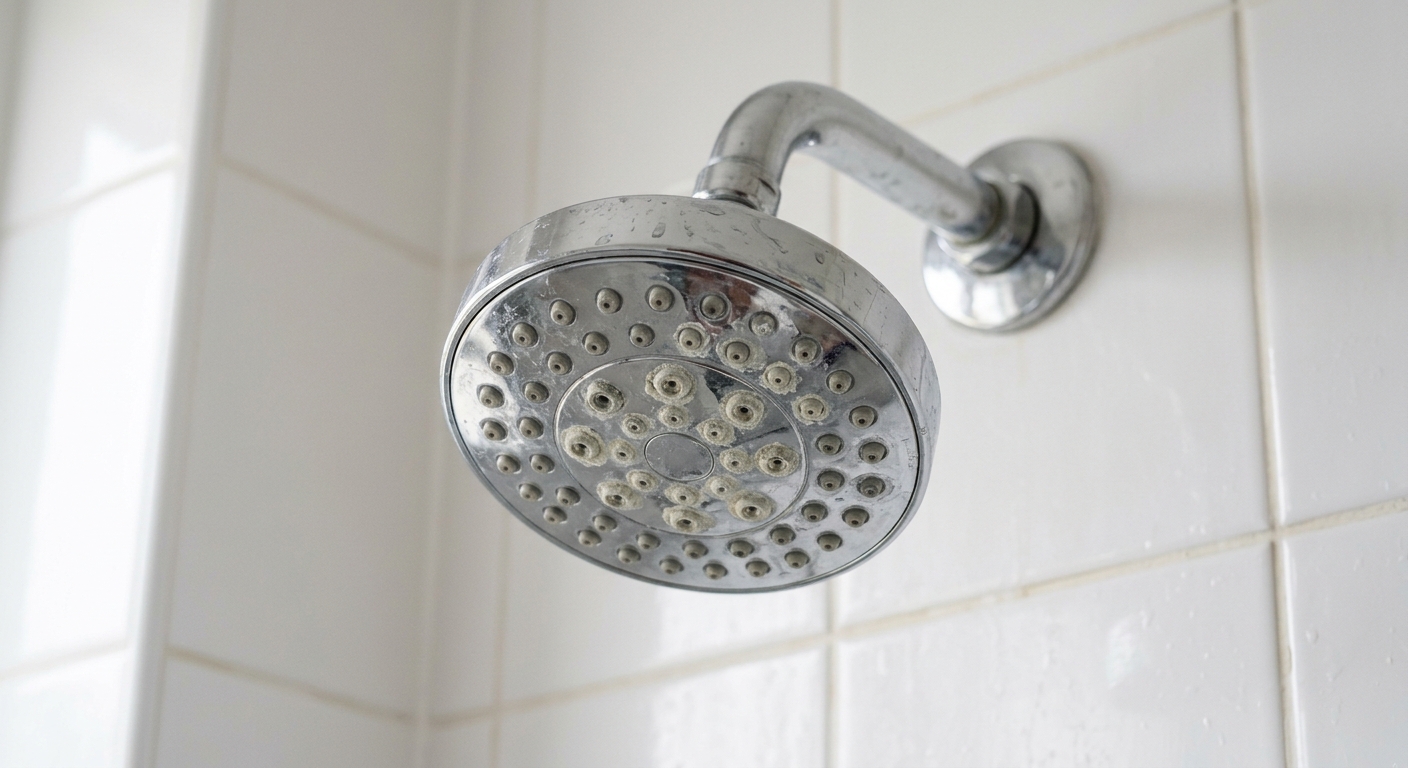
Showerhead Cleaning and Descaling for Legionella Control
For Legionella control, showerheads and hoses should be dismantled, cleaned and descaled at least quarterly, or more often where fouling builds up quickly or users are particularly vulnerable. This is the frequency HSE gives in HSG274 Part 2 for showers, spray taps and other aerosol generating assets, and it should sit within your written control scheme alongside weekly flushing of any shower that is not used regularly.
Showerhead cleaning is one of the simplest routine tasks in a hot and cold water system, yet one of the most often missed or poorly recorded. This article covers why showers matter, what the guidance expects, how to do the job and what records to keep.
Why Showers Are a Key Legionella Risk
Legionnaires' disease is caught by breathing in small droplets of water, or aerosols, that contain Legionella bacteria. HSE identifies water outlets as one source of those aerosols, and a shower is designed to produce exactly the fine spray that can be inhaled, released at head height in an enclosed space.
Several features of showers make them favourable for bacterial growth:
Water temperature. Legionella multiplies in water between 20°C and 45°C. Blended shower water usually sits within that range, and water left standing in a hose or head after use will cool into it.
Scale and sediment. Limescale on the inside of a showerhead gives a rough surface and a source of shelter for bacteria. Hard water areas see this build up quickly.
Biofilm. Flexible hoses, particularly older rubber-lined types, and the small chambers inside the head can support biofilm, which protects bacteria from heat and disinfectants.
Stagnation. Showers in spare rooms, sports changing areas and little-used toilets may go days or weeks without use, giving bacteria time to multiply.
Many showers are also fitted with thermostatic mixing valves to prevent scalding, so the water downstream is deliberately warm. That places more reliance on cleaning and flushing at the outlet.
What the Guidance Says About Showerhead Cleaning
The legal duty to assess and control the risk from Legionella comes from the Health and Safety at Work etc. Act 1974 and the Control of Substances Hazardous to Health Regulations 2002 (COSHH). The Approved Code of Practice (ACOP) L8 sets out how to meet those duties, and HSE's technical guidance, HSG274 Part 2, gives the practical detail for hot and cold water systems.
The routine inspection and maintenance table in HSG274 Part 2 includes two entries that apply directly to showers:
Showers and spray taps: dismantle, clean and descale removable parts, heads, inserts and hoses where fitted. Frequency: quarterly, or as indicated by the rate of fouling or other risk factors, for example areas with high-risk patients.
Infrequently used outlets: consider removing infrequently used showers and taps. Where they remain, flush them weekly, or as indicated by the risk assessment, until the temperature at the outlet stabilises and is comparable to the supply. For high-risk populations such as healthcare and care homes, more frequent flushing may be required.
Quarterly is therefore a baseline, not a fixed rule. Your Legionella risk assessment should consider water hardness, how quickly heads foul in practice and who uses the showers, and set the frequency accordingly. A care home in a hard water area may need monthly cleaning, while a well-used shower in a soft water area with clean heads at every inspection may be fine on a quarterly cycle.
How to Clean, Descale and Disinfect a Showerhead
The method should be written into your control scheme so that everyone does it the same way. A practical procedure looks like this:
Prepare. Wear suitable gloves and eye protection, have the descaling and disinfecting products and their safety data sheets to hand, and isolate or turn off the shower.
Dismantle. Remove the showerhead and, where fitted, the hose. Take out any removable inserts, faceplates and flow restrictors.
Inspect. Look for heavy scale, slime, discolouration or damage. Note the condition, as this tells you whether the cleaning frequency is right.
Clean and descale. Scrub away visible debris and soak the parts in a suitable descaling solution, following the manufacturer's contact time, until the scale has dissolved.
Disinfect. Rinse, then immerse the parts in a suitable disinfectant solution at the strength and contact time stated by the manufacturer. Rinse thoroughly with clean water afterwards.
Replace where necessary. Heads and hoses that are badly scaled, perished or damaged are often better replaced than cleaned.
Reassemble and flush. Refit the parts and run the shower to flush the outlet, keeping aerosol to a minimum (see below).
Record. Log the date, location, condition found, action taken and who did it.
Little-Used Showers and Safe Flushing
Showers that are not used for seven days or more should be on a weekly flushing regime, or removed if they are no longer needed. Removal is the better control: it takes away the risk rather than managing it. Where the shower must stay, our article on correct flushing procedures for Legionella control covers the method in more detail.
Flushing a little-used shower is the moment it is most likely to release contaminated aerosol, so the way it is done matters. In practice, operatives commonly:
open the shower gently at first rather than on full flow
lower the head into the tray or towards the drain, or place it in a plastic bag with a corner cut off, to keep spray down
leave the room or stand back during the initial flush, where practical
wear suitable respiratory protective equipment where significant concerns exist
run both hot and cold until the temperature stabilises and is comparable with the supply
Showers in buildings that have been closed or lightly occupied need extra attention. Our guide to managing Legionella risks during low occupancy explains how to plan for those periods.
Records to Keep for Showers
HSE's guidance on keeping records says that records of monitoring and inspection results should be retained for at least five years. For showers, a good record includes:
an up-to-date list of every shower, with its location and whether it is classed as little-used
the date each showerhead and hose was cleaned, descaled and disinfected, and by whom
the condition found (clean, light scale, heavy scale, biofilm, damaged) and any parts replaced
weekly flushing records for little-used showers
any remedial actions raised, such as removing redundant showers, and when they were completed
Recording the condition found is often overlooked, but it is the evidence that justifies your chosen frequency. If heads are consistently heavily scaled at each quarterly clean, the interval is too long. Temperature checks at sentinel outlets complement this; our article on temperature monitoring in Legionella control explains how they fit together.
Key Points
Showers produce inhalable aerosol and often hold water in the 20–45°C growth range.
HSG274 Part 2 gives a baseline of quarterly dismantling, cleaning and descaling of showerheads and hoses, more often where fouling or vulnerable users require it.
Little-used showers should be removed, or flushed weekly in a way that keeps aerosol to a minimum.
Write a consistent method into the control scheme and replace heads and hoses that are badly scaled or perished.
Record the date, condition found and action taken, and keep monitoring and inspection records for at least five years.
Frequently Asked Questions
How often should showerheads be cleaned for Legionella?
HSG274 Part 2 gives a frequency of quarterly for dismantling, cleaning and descaling showerheads and hoses. It also says the frequency should reflect the rate of fouling and other risk factors, so hard water areas and settings with vulnerable users often need a shorter interval. Your risk assessment should set the frequency for your site.
Do electric showers need cleaning for Legionella?
HSE notes that instantaneous electric showers pose less of a risk because they heat cold water as it is used rather than storing warm water. However, the head and hose can still collect scale and biofilm, so they should still be included in the cleaning and descaling regime.
Should tenants clean their own showerheads?
In rented housing, HSE's guidance for landlords says tenants should be advised to clean and disinfect showerheads regularly. The landlord remains responsible for assessing the risk and for telling tenants what they need to do, including what to do if a shower is not used for a period.
Is it better to replace showerheads than clean them?
Replacement is a reasonable option where heads or hoses are heavily scaled, perished or damaged. For routine control, cleaning and descaling is usually sufficient, and many sites rotate cleaned spares to make the task quicker.
References and Further Reading
Showerhead cleaning is a small task with a real effect on risk. Done at the right frequency, by a consistent method and properly recorded, it gives you clear evidence that one of the most direct routes of exposure in your building is under control.

Andrew Arnold
Co‑founder & Director
Andrew has over 20 years' experience in Legionella management and control. As a senior member of the Water Management Society and educated to masters level Andrew has extensive experience in legionella risk assessment of numerous systems and sectors.